« Everything in this notebook leaves a trace, and lets itself be followed. The iron a bee lodges in her abdomen may draw a compass within her; the honey hunter reads a forager's flight as a line drawn across the landscape; a lake in the Pyrenees, sounded twice a century apart, tells the slow measuring of a terroir; and the mite, its tour of the world complete, leaves behind colonies learning to live with it. Four pieces and a word, nectar, each an account of the art of following a trail. »
— Le Conservateur
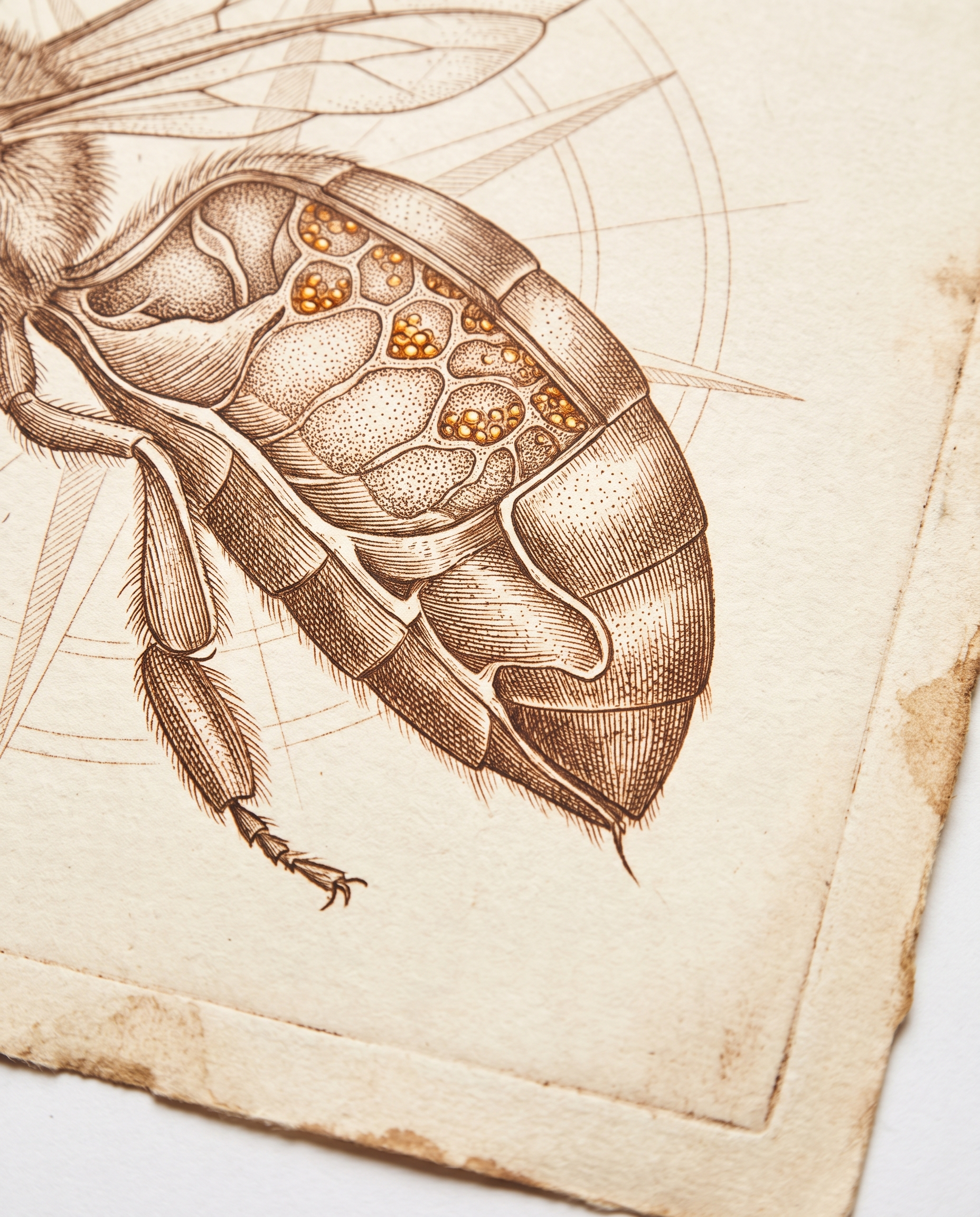
In the honey bee, grains of iron are concentrated in the trophocytes, cells of the fat body distributed through the abdomen, around the organs. This singularity, described for decades, feeds a persistent hypothesis: that Apis mellifera perceives the Earth's magnetic field, and that this iron is the instrument.
The hypothesis of magnetoreception remains debated. Experiments have shown behaviour sensitive to magnetic fields, without a mechanism being established. The fact is the iron; the compass remains a conjecture, and the Cabinet presents it as such.
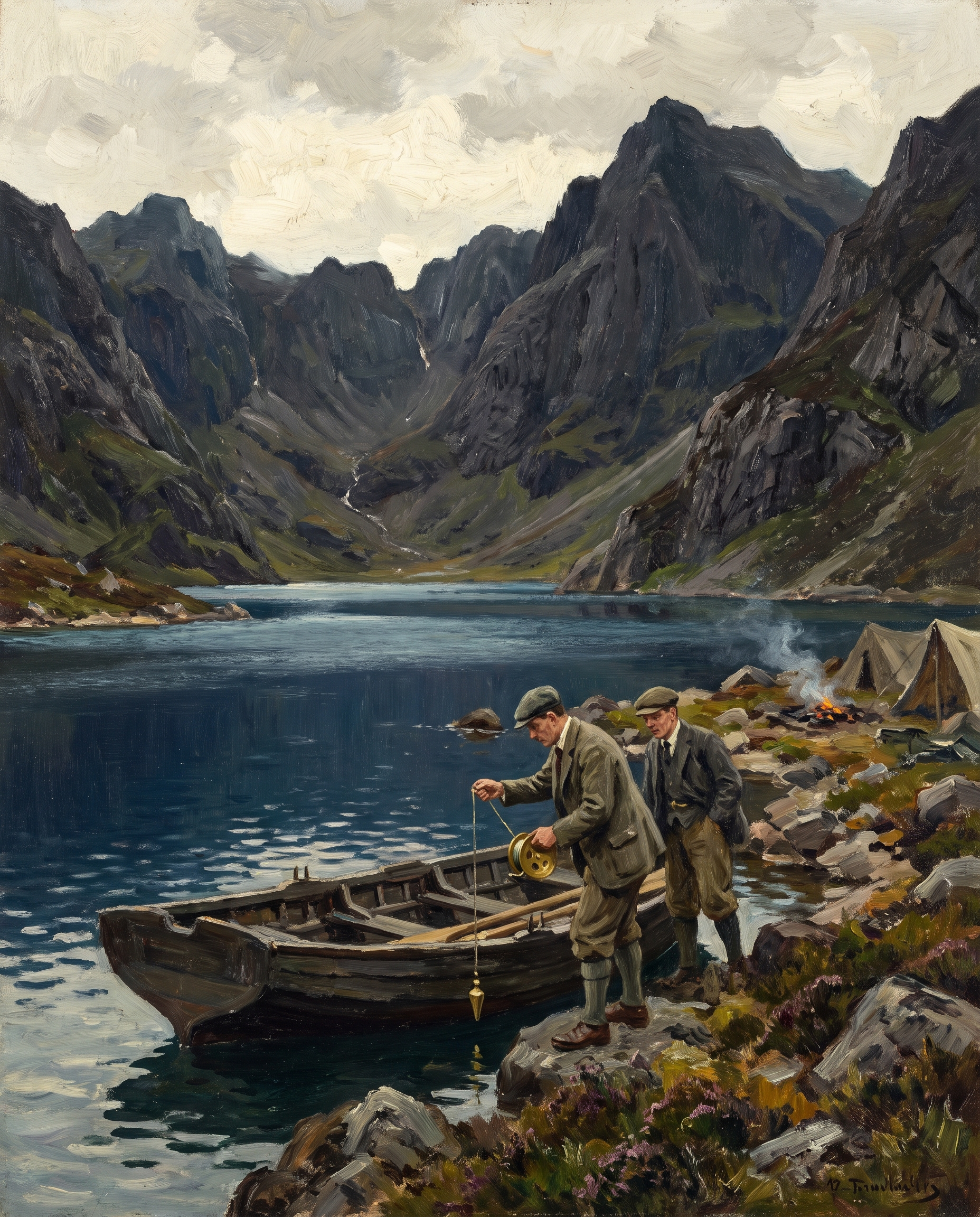
In 1920, the abbé Ludovic Gaurier, a pioneer of Pyrenean limnology, sounded the Lac Bleu, in the Pyrenees, and charted depths in the order of one hundred and twenty to one hundred and thirty-five metres. A century later, the terroir studies conducted on this site, heather country of the expedition, took the measurement again with the instruments of today.
Two soundings of the same lake, a hundred years apart: the comparison is not a record, it is knowledge. What is measured, patiently, from one generation of instruments to the next, is the landscape that carries the hive.
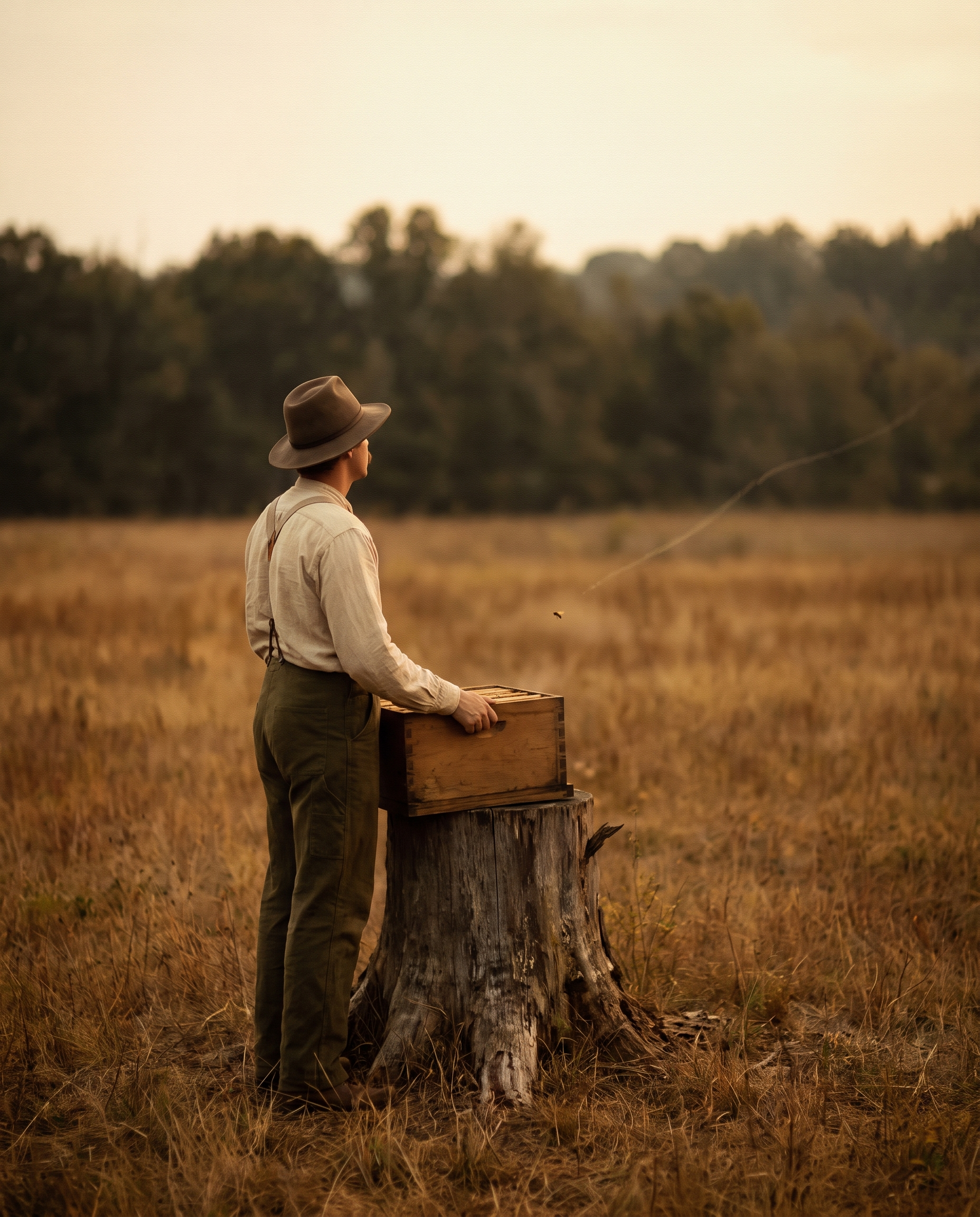
Bee lining is an art of triangulation: a worker is caught at a feeding station, marked, released, and the direction of her homeward flight observed. Repeated from several stations, these lines converge upon the wild nest.
Practised in North America since colonial times, the method is still described by Thomas Seeley in Following the Wild Bees. The bee's flight becomes a line to be read across the landscape, and honey hunting a surveyor's affair.
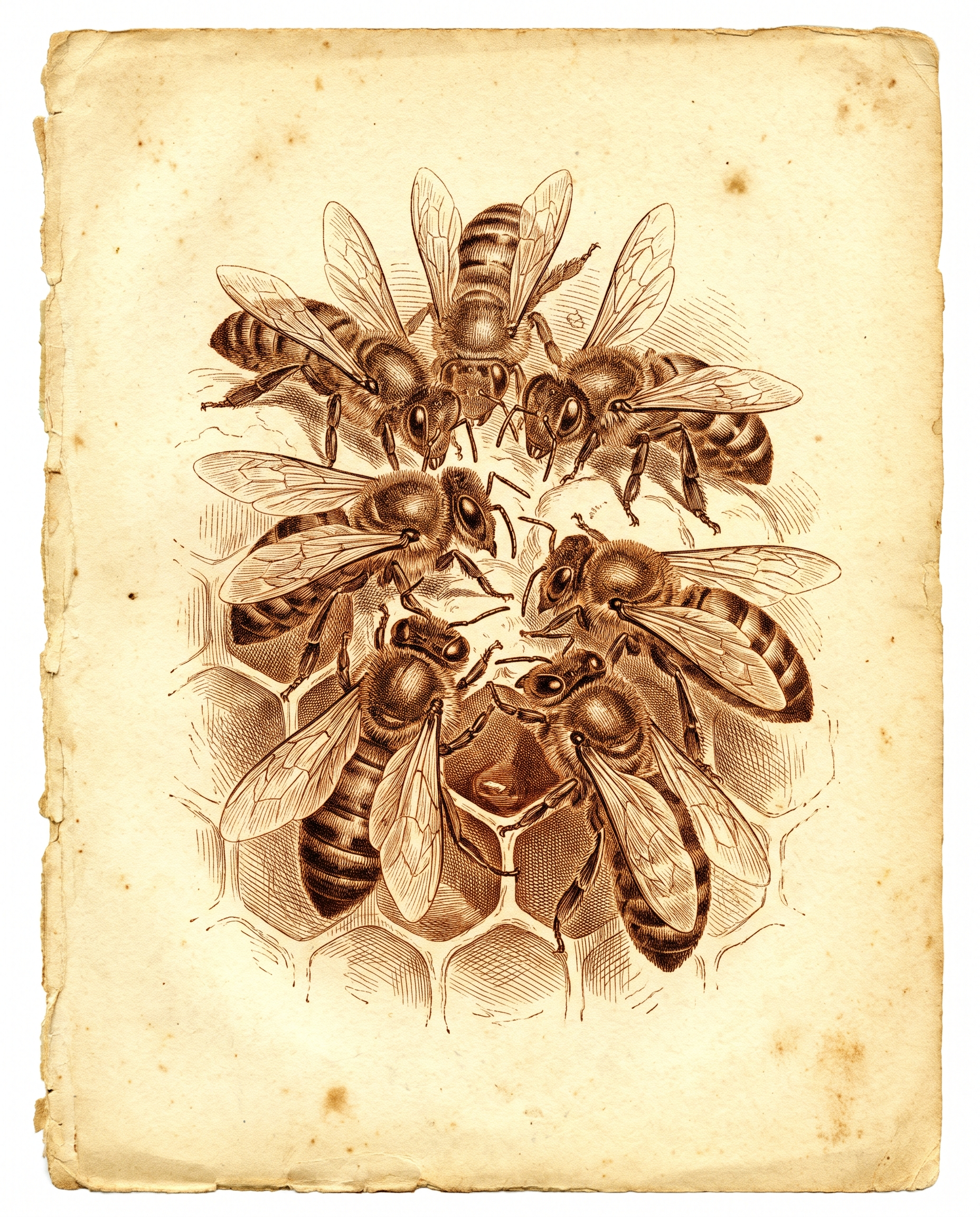
Last episode of the varroa serial. Faced with a parasite now global, certain bee populations have learnt, without treatment, to hold it in check; behaviours of resistance, grooming and the removal of infested brood, are documented in several of them.
The experiment conducted on the island of Gotland, in Sweden, from the late 1990s onward, remains the documented example: colonies left to themselves, decimated at first, then stabilised, chiefly because the mite reproduces less well in their brood. Coexistence, rather than eradication, writes the next chapter of this story.
The word only came to name the sweet liquid of flowers in the modern era, when botanists borrowed it from the vocabulary of the gods to name what the bee gathers. The cup of Olympus settled upon the corolla, and there the bee drinks what was first meant to grant life without end.
 The Honey Factories