"Some plants we take for native are in truth well travelled, and some gestures we take for ancient have passed from hand to hand, unchanged, since Antiquity. This number follows both, along the routes they still travel."
— Le Conservateur
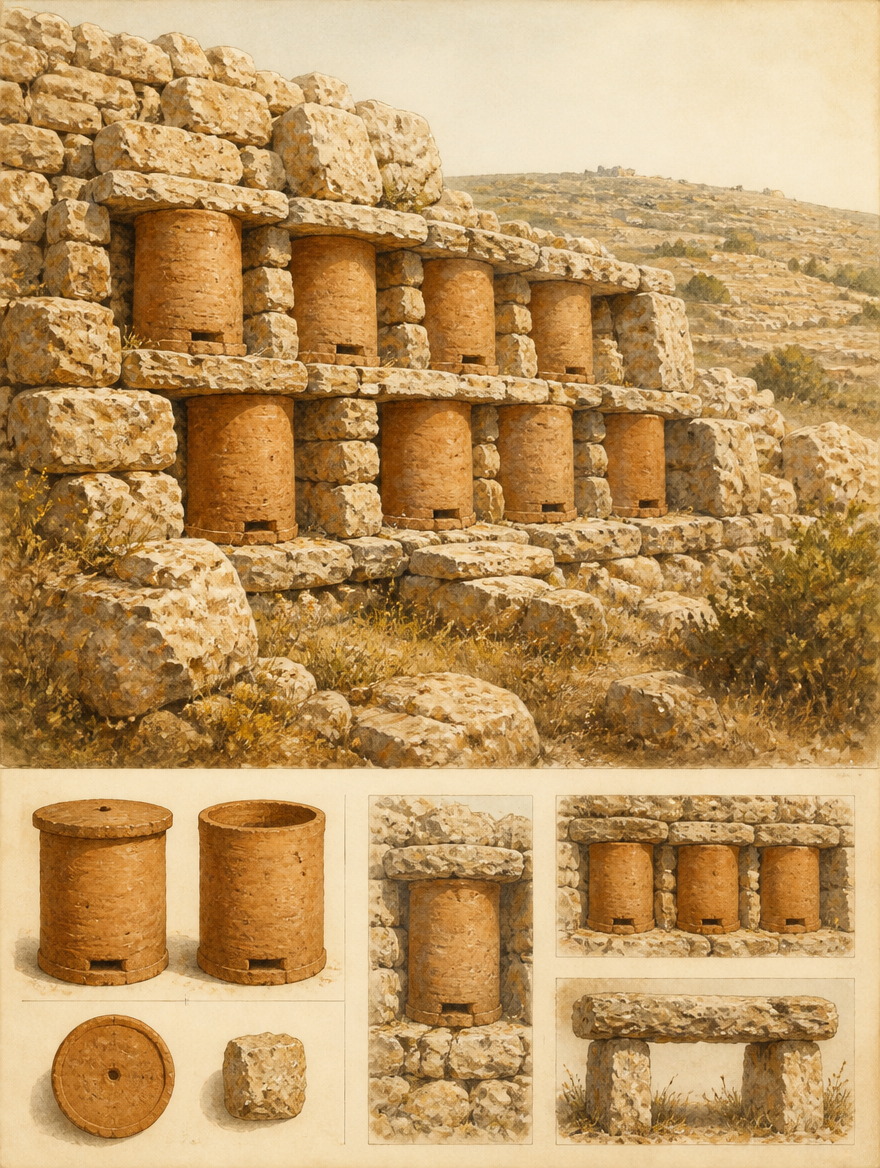
On the island of Malta, archaeology has uncovered several hundred cylindrical terracotta hives, dated to roughly twenty-five centuries ago, which formed the dominant model of the island's apiary. Elsewhere in the Mediterranean basin, Latin authors describe an altogether different architecture.
Varro, Columella and Pliny the Elder describe hives woven from wicker and coated with a mortar of clay and dung, known as the pourget, a technique sparing in material and well suited to land without fired clay. Two solutions, one same function: housing the colony without excessive constraint.
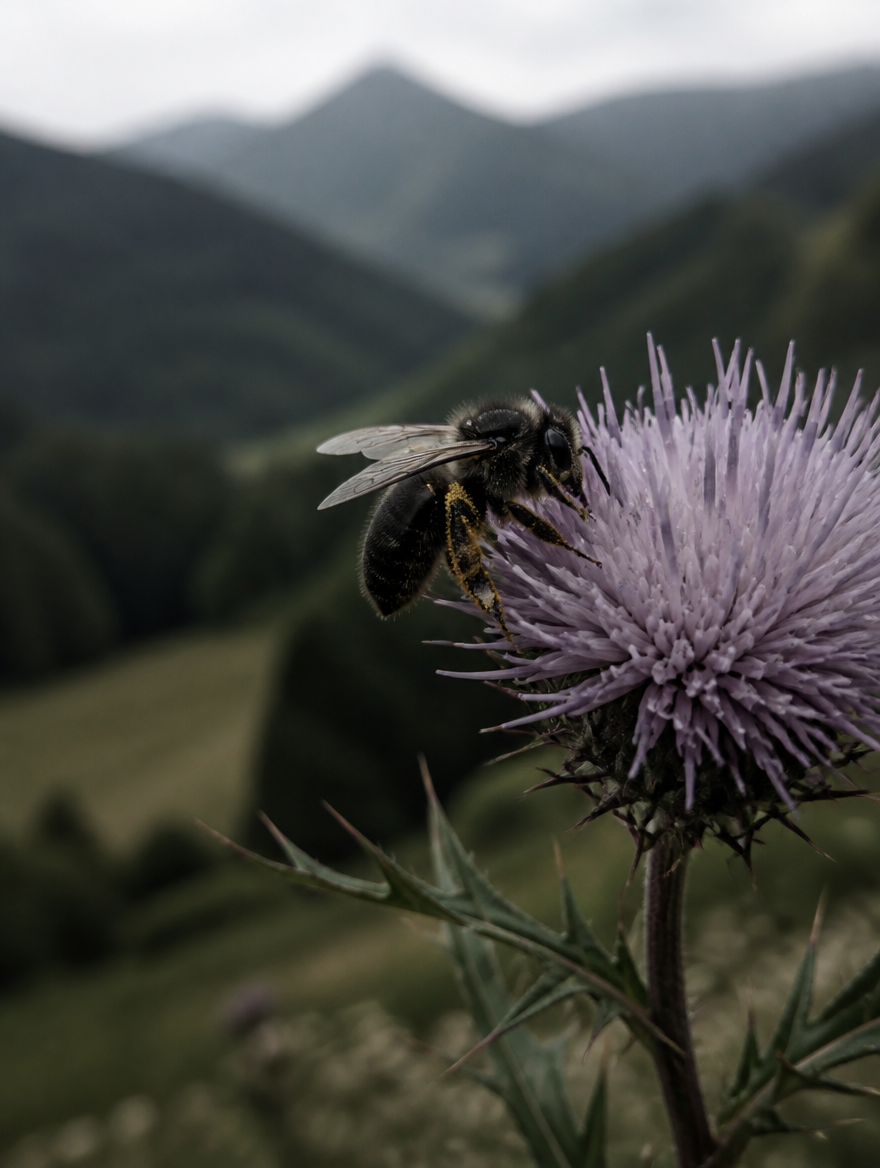
A dialogue opened this week with a beekeeper in Ariège, custodian of colonies of black bee (Apis mellifera mellifera). A sample has been granted to the house for characterisation.
The house awaits the findings before any further step. This file, recorded under reference EXP003, marks the third terroir under prospection, following two other enquiries already under way.
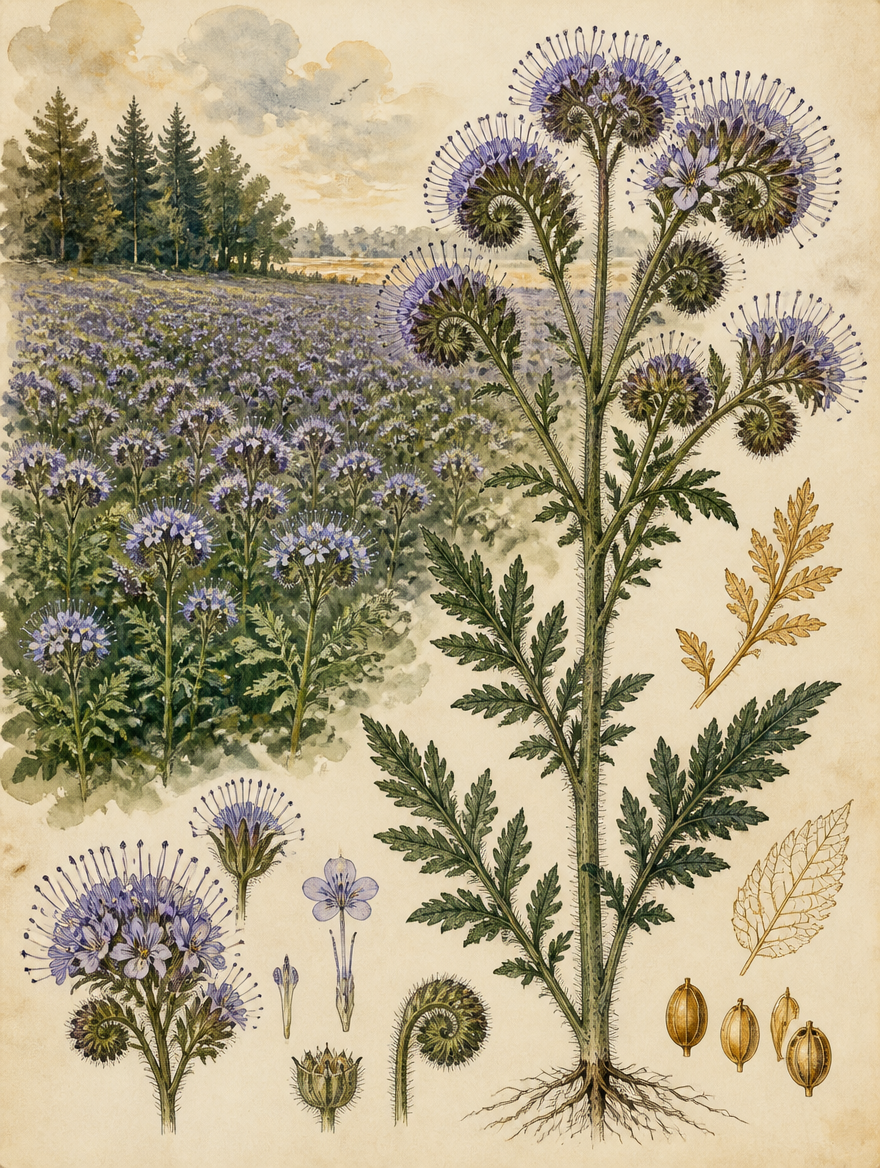
Native to northern Mexico, phacelia (Phacelia tanacetifolia) was introduced to Europe in 1832, first as a garden curiosity. It later became one of the most productive melliferous plants known.
A hectare in full bloom can yield, depending on conditions, somewhere between two and five hundred kilograms of honey. Agronomists also value it as a green manure, often paired with buckwheat, a single seed serving, in turn, both soil and hive.
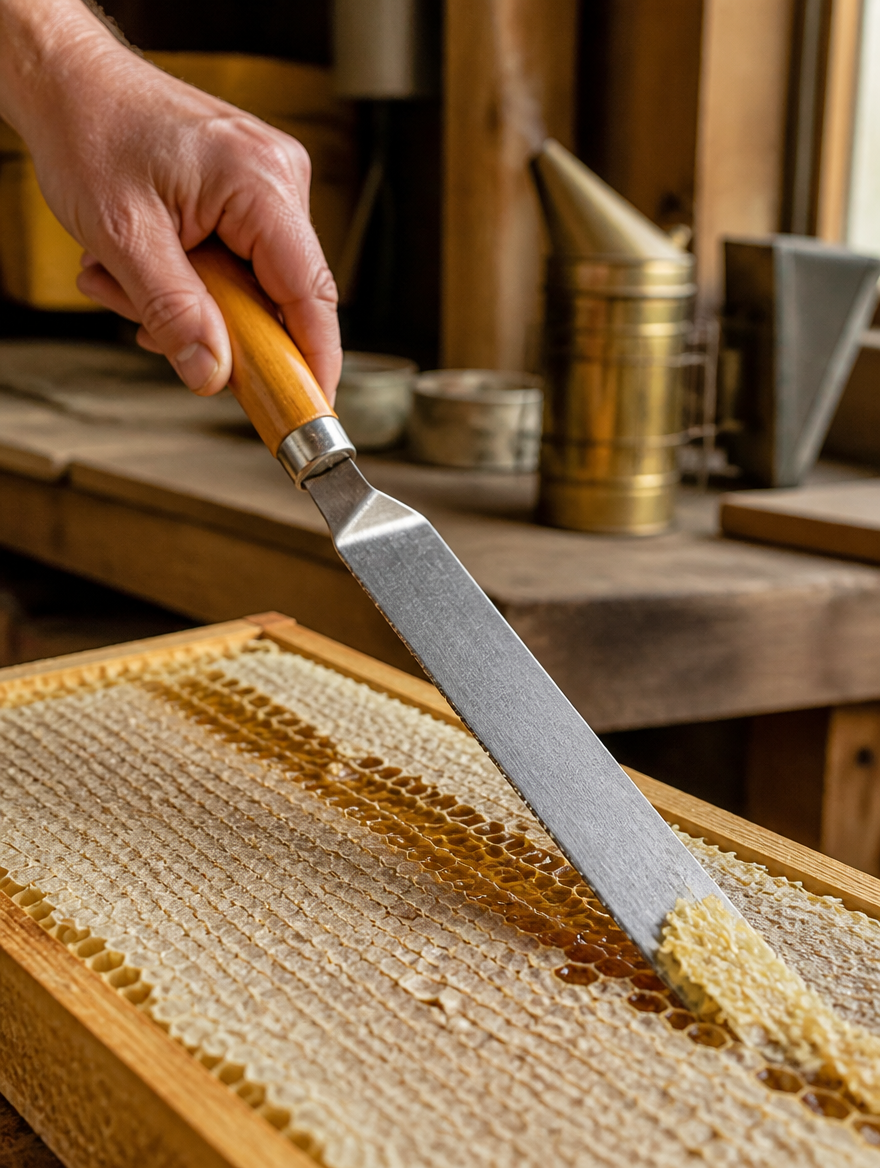
Before the centrifugal extractor, there was the knife. Manual uncapping consists of slicing, in one continuous upward stroke, the thin wax film that seals each cell before extraction.
The gesture, requiring a steady hand and a blade held at an angle, historically precedes centrifugation and remains practised today by beekeepers who choose to return intact combs to their colonies. The next episode will follow the fate of these combs, once freed of their cappings and returned to the hive.
The word's etymology remains disputed: a borrowing from Arabic abū araq, echoing the sudorific virtues long attributed to the plant, or a corruption of low Latin corago. Borage (Borago officinalis), native to Syria, reached Europe by way of North Africa and Spain; it featured in medieval physic gardens before later being valued as a melliferous plant and pest repellent.
 The Honey Factories