“Where does a thing come from: the question has the deceptive simplicity of evidence never examined. This issue asks it five times. It holds for the bee itself, whose lineage, redrawn from one hundred and forty assembled genomes in 2014, was placed in Asia rather than Africa, without closing the debate. It holds for honey sold in shops, whose label, since June 2026, must finally state which countries it passed through. It holds for a Sidr honey that is born of a single valley in Yemen and a few weeks of bloom. It holds for a discreet mite, described on Java in 1904 and long kept as a mere curiosity of collection. It holds, lastly, for the word abeille itself, which travelled up from the Midi until it took hold in French. Four pieces and a word, each traced back to its source.”
— The Conservateur

In 2014, in Nature Genetics, the Wallberg team assembled one hundred and forty Apis mellifera genomes, representing fourteen populations, and recorded close to 8.3 million variants. The data placed the species' most probable cradle in Asia, contradicting the African hypothesis that had prevailed until then in the literature, notably in the work of Han and colleagues in 2012.
The 2014 result was presented at the time as a reinforced hypothesis rather than a settled fact; the authors' caution reflected the difficulty of assembling a certain genealogy, from a still-limited number of genomes, for a species so widely distributed.
The debate narrowed in 2021, when Dogantzis and colleagues, in Science Advances, extended the sample to two hundred and fifty-one genomes covering eighteen subspecies. Their findings consolidate a west Asian origin and distinguish three successive out-of-Asia expansions, for a lineage whose age is estimated at roughly seven million years.
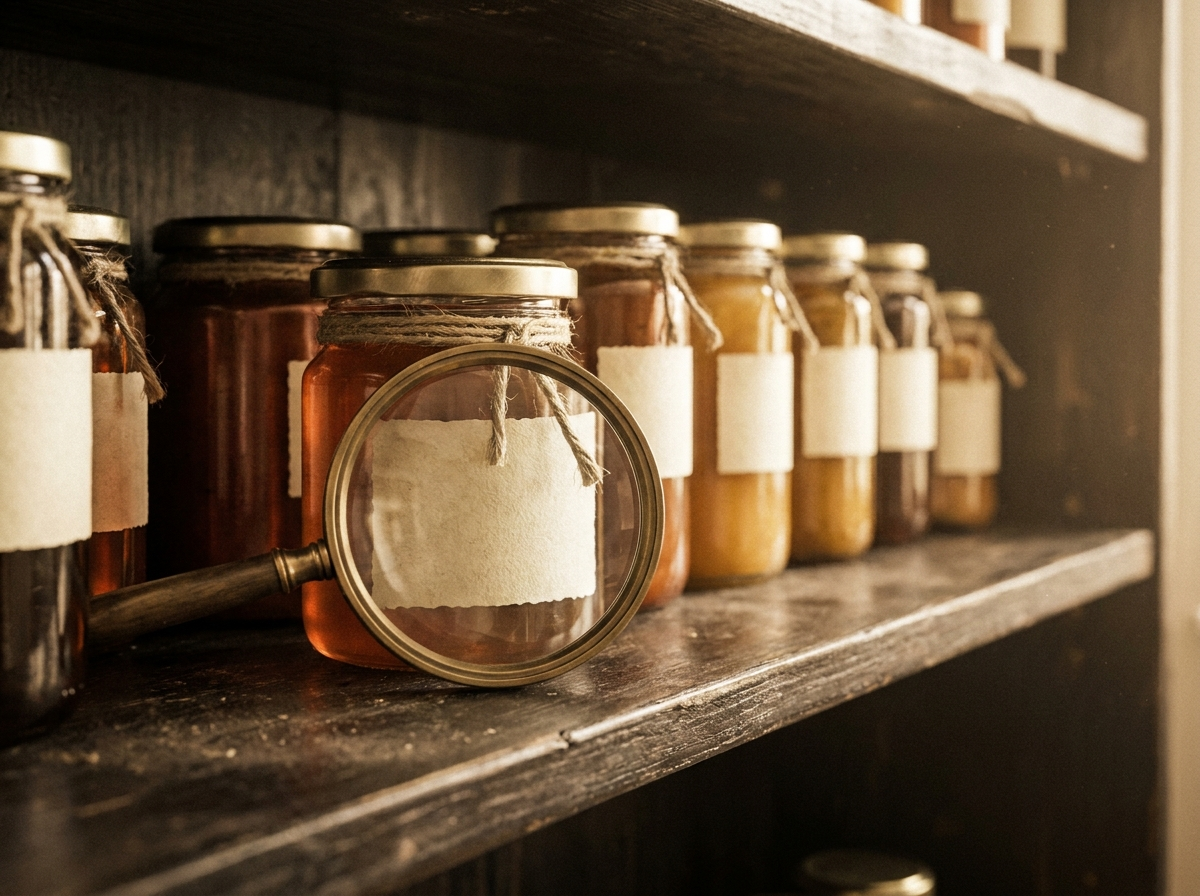
Since 14 June 2026, Directive (EU) 2024/1438, known as the “breakfast directive,” has applied to honey labels sold within the Union. For blends, all countries of origin must now appear in the main field of vision, listed in descending order of weight and given as percentages, with a tolerance of 5 per cent.
Beyond four countries of origin, member states retain the option of limiting the displayed percentages to the four principal origins, provided these together account for more than half of the blend.
The requirement answers a finding documented by the “From the Hives” action, carried out jointly by the Commission, the Joint Research Centre, and the European Anti-Fraud Office: of three hundred and twenty samples taken at borders, one hundred and forty-seven, nearly one in two, were found suspect of adulteration, against roughly 14 per cent between 2015 and 2017.
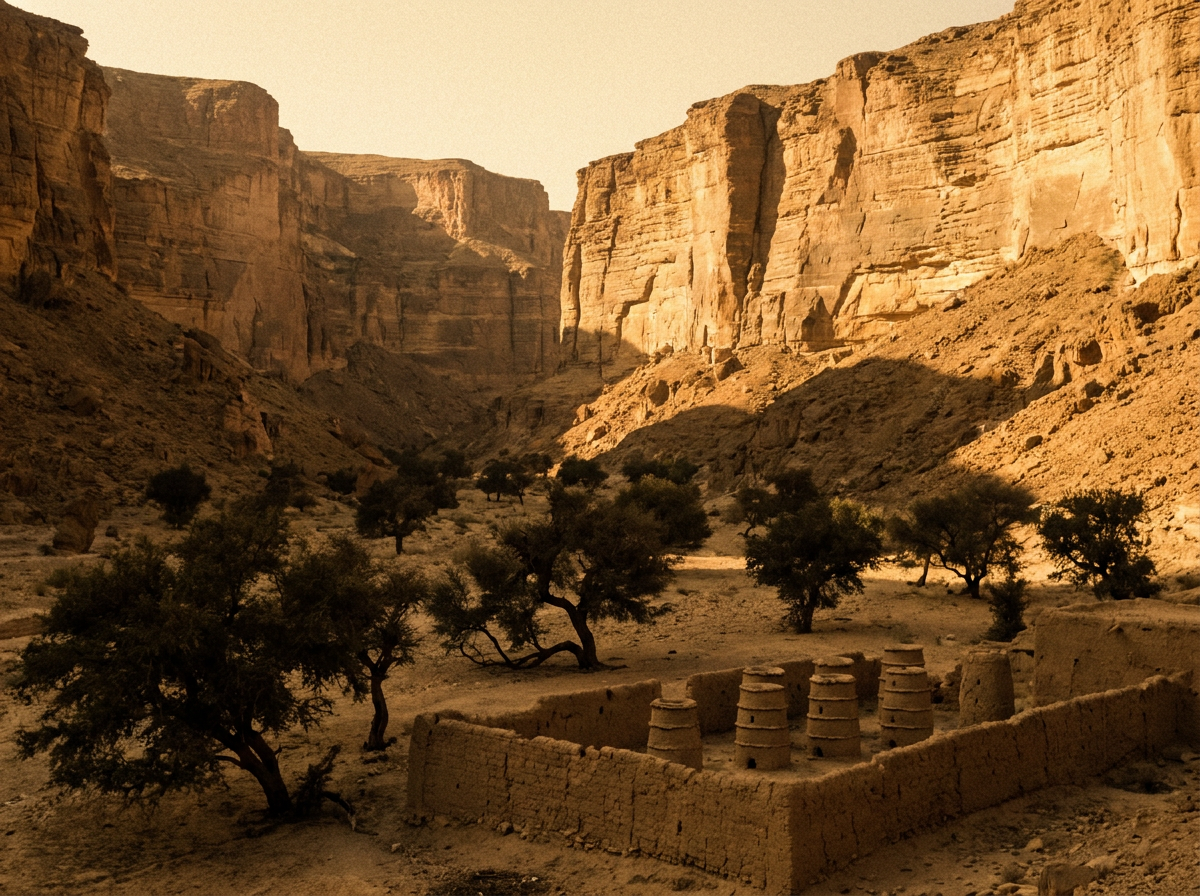
The sidr, Ziziphus spina-christi, the desert jujube, flowers in autumn in the Wadi Do'an, a valley in Hadramaout, Yemen. The bloom runs from October to November, and the harvest window that follows rarely exceeds three to six weeks.
The harvest is reported as manual, carried out on traditional hives housing semi-wild colonies. The resulting honey belongs to no other region: it is bound to this particular valley and to this brief flowering calendar.
Specialised traders report prices of several hundred euros per kilogram, a range drawn from their own accounts rather than from any academic measure. The Yemeni context surrounding this harvest calls here for neither elaboration nor dramatisation.

In 1904, on the island of Java, the collector Edward Jacobson took a mite from colonies of Apis cerana, the Asian honeybee. That same year, the Dutch acarologist Anton C. Oudemans described the species and named it Varroa jacobsoni, in honour of its collector.
Its original host remained, for several decades, the Asian honeybee alone. The mite stayed for close to half a century a mere curiosity of collection, cited in acarological catalogues without troubling beekeeping.
This discreet status would not last. The next episode of this serial follows the host jump to Apis mellifera and the worldwide spread that ensued; a third will return to the 2000 revision, when Anderson and Trueman distinguished Varroa destructor from Varroa jacobsoni.
Old French did possess a langue d'oïl form inherited directly from apis: ef, later é, plural es, judged too brief and also rivalled by avette; it was ultimately the southern form that prevailed and became general usage. Even the name of the bee is thus a migrant, having travelled up from the Midi to take hold in general usage: a quiet reminder that origin sometimes lodges itself even in the language that names it.
 The Honey Factories